
When Every Bite Hurts: Living With Sjögren's Disease

I've been wearing braces on and off for nearly 15 years. At 46 years old, I still get the same questions:
"Are you trying to look younger?"
"Your teeth look fine."
"Didn't you wear your retainer?"
"Why does your gap keep coming back?"
Most people assume braces are cosmetic.
Mine are medical.
The reason has nothing to do with wanting a perfect smile. It has everything to do with living with Sjögren's disease.
"Isn't Sjögren's just dry eyes and dry mouth?"
That's probably the biggest misconception about Sjögren's.
For years it was called Sjögren's syndrome, but today it's recognized as a serious systemic autoimmune disease that can affect nearly every organ in the body.
Like many people with autoimmune disease, I don't just have Sjögren's. I also live with lupus and several other autoimmune conditions. Some days it's hard to tell which disease is responsible for my symptoms. But when my mouth starts hurting, I usually know. That's my Sjögren's talking.
Eating isn't enjoyable anymore
People who eat with me joke that I eat like a bird. I laugh along with them. What they don't realize is that I'm not eating tiny bites because I'm watching my girlish figure. I'm eating tiny bites because my teeth hurt.
After just a few chews of steak or chicken, my mouth gives up. Sometimes even rice hurts because it's too dry.

Pasta? At home, I intentionally overcook it until it's almost falling apart because it's easier to chew. That became especially memorable during a recent trip to Italy. I politely asked the waiter if my pasta could be cooked longer because al dente pasta hurts my teeth. He looked at me like I had insulted generations of Italian cooking. He smiled politely and said he'd tell the chef.
Unfortunately, my pasta came out even firmer than usual. I tried to eat it anyway. Eventually, I sat there crying with my husband because something as simple as eating had become painful again. People often don't understand that Sjögren's doesn't just cause dryness. It changes your relationship with food.
This or That
Does your mouth or bite hurt so much that it changes how or what you can eat?
My braces are medical, not cosmetic
The dental challenges don't stop with sensitive teeth. Because I also take blood pressure medications after my kidney transplant, I developed gum overgrowth—a known side effect of certain medications such as Nedipine (Procardia XL) and Amlodipine (Norvasc). Combined with Sjögren's, it created the perfect storm.
The excess gum tissue kept undoing the progress my braces were making. Instead of removing the braces, my orthodontist and periodontist decided to keep them on much longer than expected while we managed the gum overgrowth. I've now had SIX gum reduction procedures. Each procedure required treating one side of my mouth, waiting about a month to heal, and then repeating the process on the other side. It's not something anyone signs up for willingly.
Dental care looks different with Sjögren's
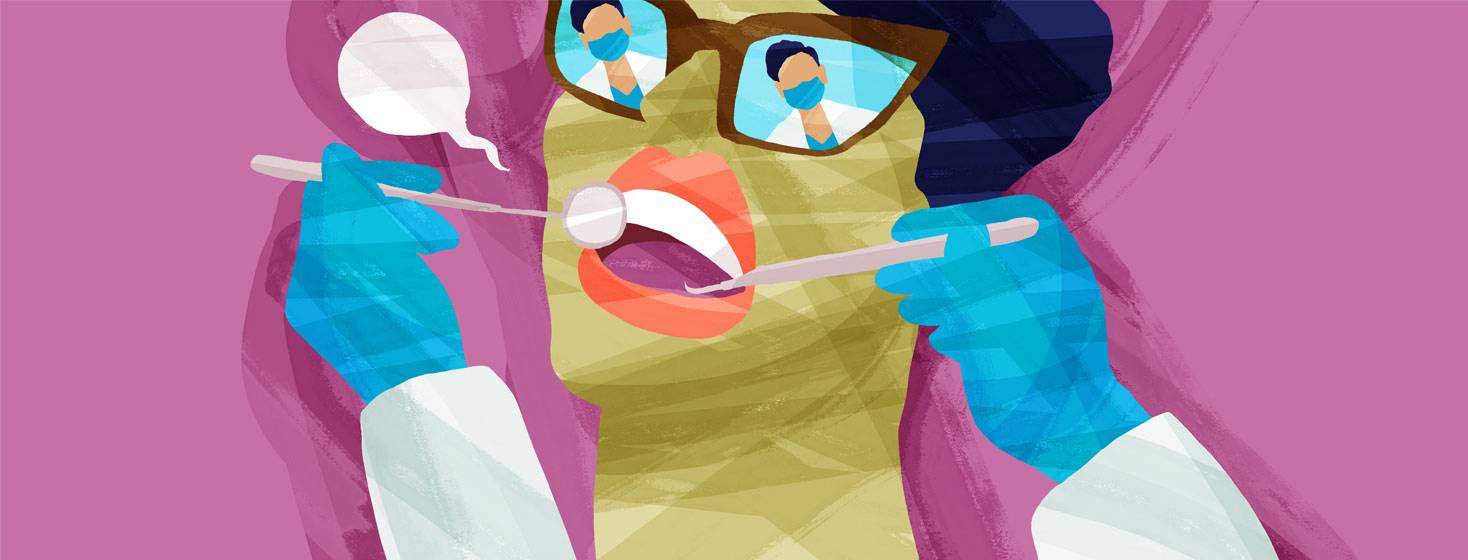
Most people visit the dentist twice a year. I go four times. Every cleaning requires planning. I receive local anesthetic, use nitrous oxide, put on my headphones, and mentally prepare myself.
Even routine cleanings can be incredibly uncomfortable because of the sensitivity that comes with Sjögren's. One lesson I've learned is that your dentist needs to know about your autoimmune disease. Don't assume they'll ask. Tell them. Explain what hurts. Tell them if your mouth is extremely dry. Tell them if your teeth are sensitive. Tell them if your gums bleed easily. The more they understand your disease, the better they can care for you.
My advice
- If you're living with Sjögren's, don't wait until you're having serious dental problems to find the right dentist. Look for someone familiar with autoimmune diseases—or even better, someone experienced caring for patients with Sjögren's.
- Stay hydrated throughout the day.
- Keep regular dental appointments.
- Ask your healthcare providers whether any of your medications could be contributing to dry mouth or gum changes.
- And don't dismiss "dry mouth" as a minor symptom. Saliva protects your teeth. When it's reduced, your risk of cavities, gum disease, oral infections, and other complications increases significantly.
People often think Sjögren's is simply about carrying a bottle of water everywhere. For many of us, it's about navigating chronic pain every time we sit down to eat. My braces may be the first thing people notice. But they're really a reminder of something much deeper: autoimmune diseases don't always look the way people expect them to.
Remember to be true to your teeth—or one day, they may become false to you.
Join the conversation